Friday, April 19, 2024

Desma 9 - Week 3 Robotics + Art

(The Work)

I think it is interesting to see how society has responded to the introduction of industrialization and automation over the century during the 1900s to now in the quarter of the 2000s, especially as it relates to the reproduction of art and how automation is integrated into daily life today. As discussed by Walter Benjamin in his essay, "The Work of Art in the Age of Mechanical Reproduction" in 1936, Benjamin voices the concern of how the reproduction of art and films through the usage of technology may taint how art is created (1). He brings up his belief that the "mechanical reproduction of art changes the reaction of the masses toward art" because he thinks that a piece of art tends create a "reactionary attitude," whereas a film produces a "progressive reaction" (3). This stems from the fact that movies are mass produced and are easily accessible to more people than a famous painting would during this time period if the early 1900s. 

I believe that this idea is still somewhat relevant today in an age of social media where artworks are so easily accessible through different platforms such as Twitter and Instagram. Despite the easy accessibility to art today, there has been a subculture within art, such as the recent boom of NFT art that created a lot of criticism with a lot of people (Charlesworth). It echoes Benjamin's perspective that the more elite and less easily accessible a piece of art is, the more conservative reaction comes about it. It is clearly seen with the reaction of NFT art with many people either loving or (mostly) hating the concept (Charlesworth). However, easily accessible forms of art tend to still receive a fair amount of criticism if it is something that is not deemed worth, but with more people's access to the content it allows for more opinions to be shared. However, a main issue with the mass production of art now is that if it is something that the majority likes, social media has a major issue with copyright and giving artist credit where it is easy for someone to steal general artwork  (LeMonnier).

("Wall E")

As art develops, another big concern these days is the introduction of A.I. and automation in art. As described by Professor Machiko Kusahara, the Western world has generally had a bad reception to robotics in general at the early start with associations with cyborgs taking over the world. It is even seen in contemporary examples of movies, such as Wall E where it is predicted that when robots eventually take over, humans will simply become too lazy and lose their planet. This same notion exists with people and artists fearing that their jobs will be lost due to the advancement of technology and A.I. as well. Despite this, with technology improving every year there are a lot robot integration into daily lives, such as the Professor described where Japan introduces robots into helping with service at jobs or assisting with people regulating emotions at work ("Robots tested"). 
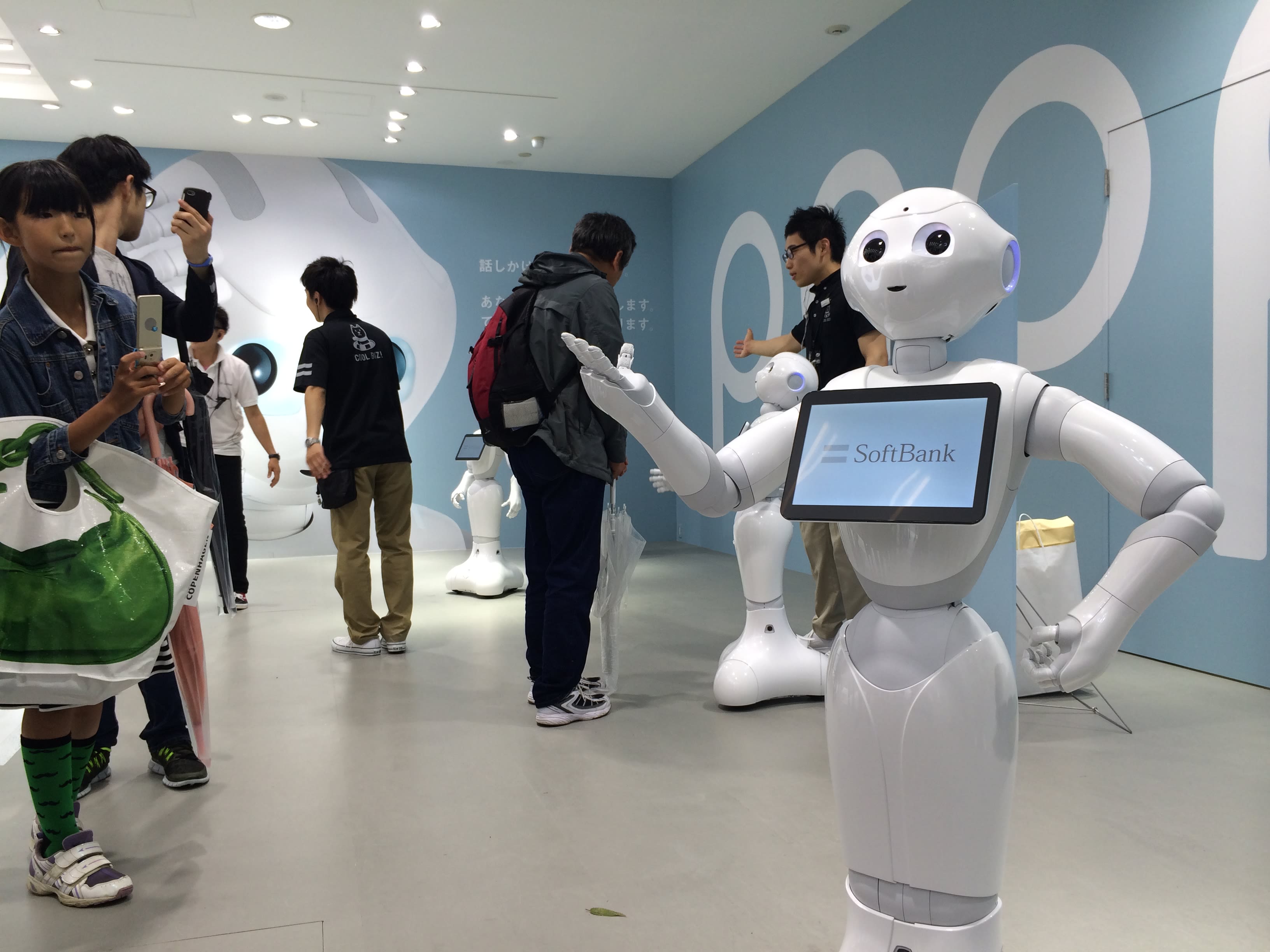

("Robots tested")

Works Cited

Benjamin, Walter. The Work of Art in the Age of Mechanical Reproduction. 1935.

Charlesworth, J.J. "Why the Artworld Loves to Hate NFT Art." ArtReview, 17 Mar. 2021, artreview.com/why-the-artworld-loves-to-hate-nft-art-beeple-christies-grim

LeMonnier, Ellie. "Thoughts on Art in the Age of Social Media." Gallery Mar, 11 July 2023, www.gallerymar.com/2023/07/thoughts-on-art-in-the-age-of-social-media.
'
"Robots tested in Japan companies." CNN, 19 Oct. 2016, www.cnn.com/2015/04/24/asia/japan-robots-work/ index.html.  

The Work of Art in the Age of Mechanical Reproduction – Walter Benjamin Cover. Rebecca Woodall 
     Photography, rebeccawoodallphotography.wordpress.com/2015/02/22/the-work-of-art-in-the-age-of-mechanical-reproduction-walter-benjamin/.

"Unit 3 View." BruinLearn, bruinlearn.ucla.edu/courses/183769/pages/unit-3-view?module_item_id=6671238. 

"Wall E." IMDB, 2008, www.imdb.com/title/tt0910970/mediaviewer/rm1659211008/?ref_=tt_ov_i.


Friday, April 12, 2024

DESMA 9 - Week 2 Math + Art


(Usvat)

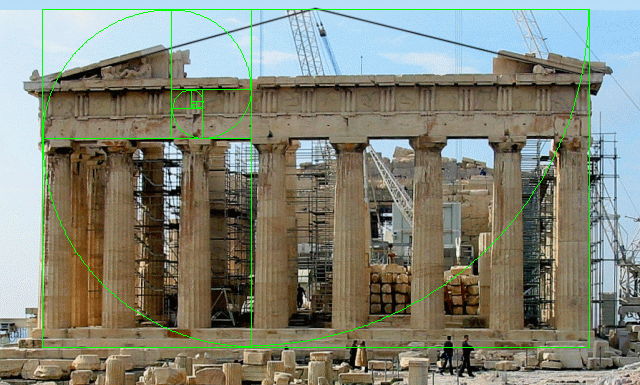
Despite the situation today where art and science separate the two in their own categories, it is interesting to learn that mathematics has been involved with both for many centuries in the past. Mathematics can serve as a backbone for art that is considered very aesthetically pleasing and also as a backbone for sciences. For example, the golden ratio is a ratio denoted as phi that is a number that many  artists follow to create proportional pieces. This includes the Parthenon in Greece (("Mathematics-pt1-ZeroPerspectiveGoldenMean.mov" 25:29). Examples like this demonstrate that even though at times it seems like art and sciences are on opposite sides of a pole, mathematicians can bring them together. In fact, this form of art is considered aesthetically pleasing with its basis in math.

(Science+Art Project)

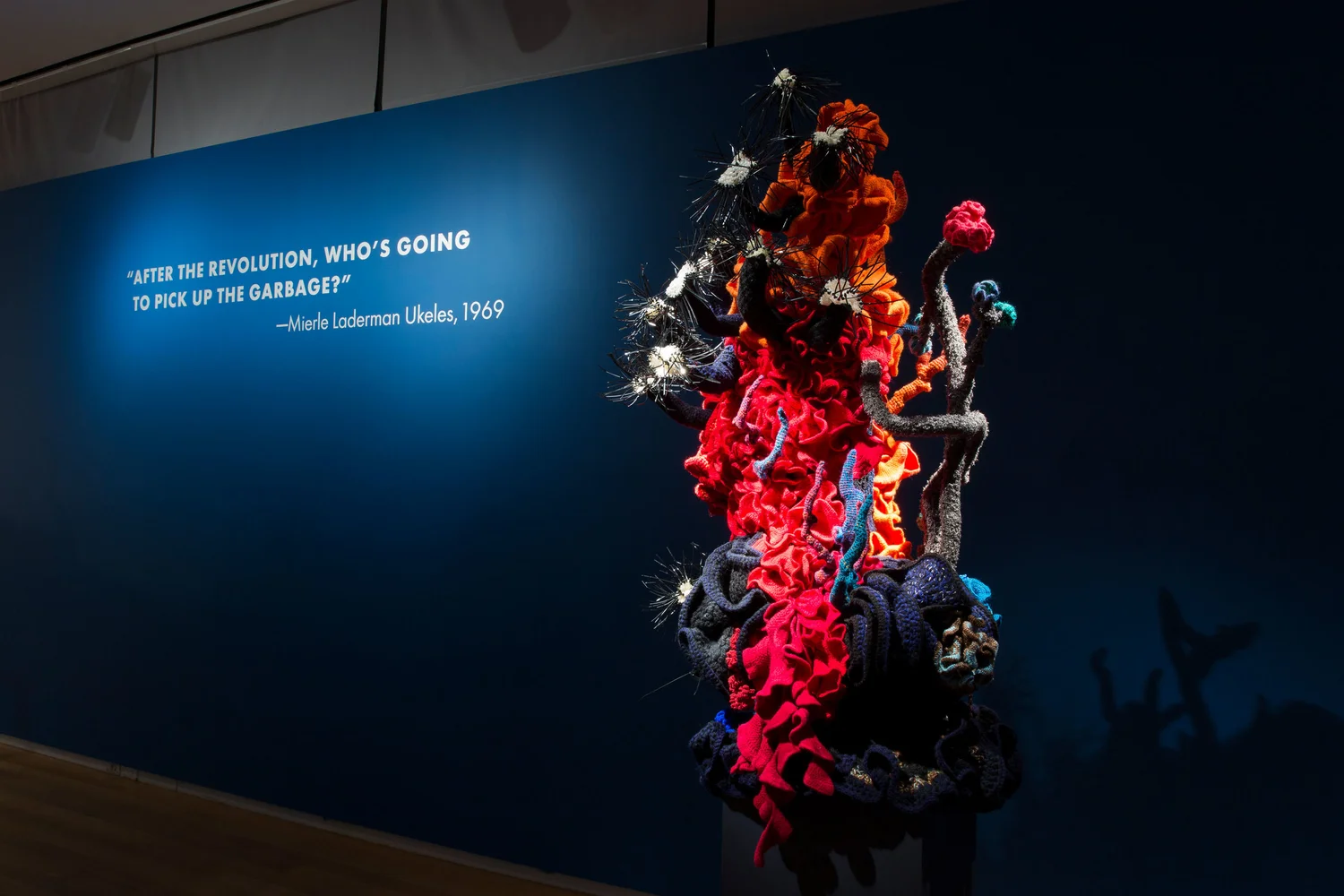
An interesting museum installment that combines art and math is the Crochet Coral Reef found in the Museum of Arts and Design in NYC. The art installment took a lot of human, mostly female, labor to create the various corals that have geometric designs ("About the Project"). It represents how something large scale like this was created when humans come together, which is similar to how humans can collaborate to solve ecological problems ("About the Project"). It is also interesting because the corals that were crocheted follow a hyperbolic geometric shape that has existed in nature for many years, but mathematicians have struggled to prove them (Science+Art Project). This art piece represents the importance of the intersection of science, art, and mathematics which can come together to not only be aesthetically pleasing to look at, but also demonstrate an important understanding and lesson in science of protecting the coral reefs.

("What Is a Fractal?")

Art, science, and mathematics can all come together to work with each other rather than clash with one another as subjects to aim for a better understanding of the world. As mentioned earlier, one of the ways mathematics manifests itself in art is through the golden ratio. Despite human created art being a place where this ratio shows up, the ratio also appears a lot in nature, such as in sunflowers (Choi). So, having an understanding of mathematics and art can help in science to learn more about how the world works. Another example of how math and art can manifest itself is through fractals. Fractal art is a form of art that utilizes mathematical equations to create it and this can also be found in nature and the leaves of plants (Park). It can also be seen in the human body, which is an area science is found in to understand how individuals operate ("What Is a Fractal?").  Overall, this is to say that all three subjects can provide a better understanding of the world around us, despite a lot of people placing these subjects in very different categories. This is especially true in today’s education system, which is unfortunate. 

Works Cited


"About the Project." Crochet Coral Reef, crochetcoralreef.org/about/theproject/. 


Choi, Jiwon, et al. "The Most Irrational Number that Shows up Everywhere: The Golden Ratio." Journal of Applied Mathematics and Physics, vol. 11, no. 4, Apr. 2023.


"Mathematics-pt1-ZeroPerspectiveGoldenMean.mov." YouTube, uploaded by UC Online, 9 Apr. 2012, www.youtube.com/watch?v=mMmq5B1LKDg. 


Park, Hyde. "Amazing Fractals Found in Nature." Mathnasium, 3 Jan. 2023, www.mathnasium.com/ math-centers/hydepark/news/amazing-fractals-found-nature-hp. 


Science+Art Project: Crochet Coral Reef. Margaret Wertheim, www.margaretwertheim.com/crochet-coral-reef. Accessed 12 


Usvat, Liliana. "Mathematics of the Parthenon." Mathematics Magazine, www.mathematicsmagazine.com/Articles/Mathematics_ofTheParthenon.php.


"What Is a Fractal?" Iternal, iternal.us/what-is-a-fractal/. 


x

Friday, April 5, 2024

Desma 9 - Week 1

(The Two Cultures)

The two cultures as defined by C.P. Snow in his book, The Two Cultures and the Scientific Revolution, is the rift between scientists and non-scientists. This divide pits these two groups agains each other. Snow expresses that the "polarisation is a sheer loss to us all" because it doesn't allow for collaboration between the two groups (Snow 12). He strongly believes that the separation during the late 1960s is "much less brideable among the young than it was even thirty years ago" (Snow 19). Despite his book being written over 70 years ago, this situation still exists today

Professor Vesna states that there is still this gap that exists between these two cultures (Vesna 122). However, there the usage of technology and art today that allows for the bridge to be formed as artists use techniques closer to scientists to create their art. This presents more and more similarities between the two cultures. Similar to Snow, Professor Vesna presents the problem originating from universities (“TwoCultures part1” 2:58). Education was and is too specialized that leads to this split in the two cultures. 

(Franklin D. Murphy)

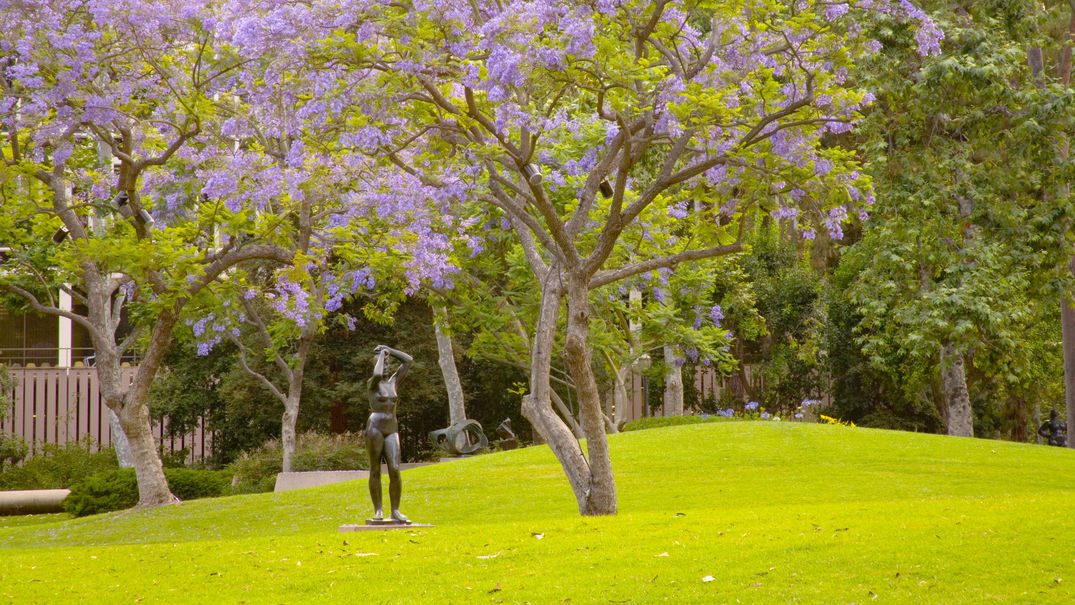
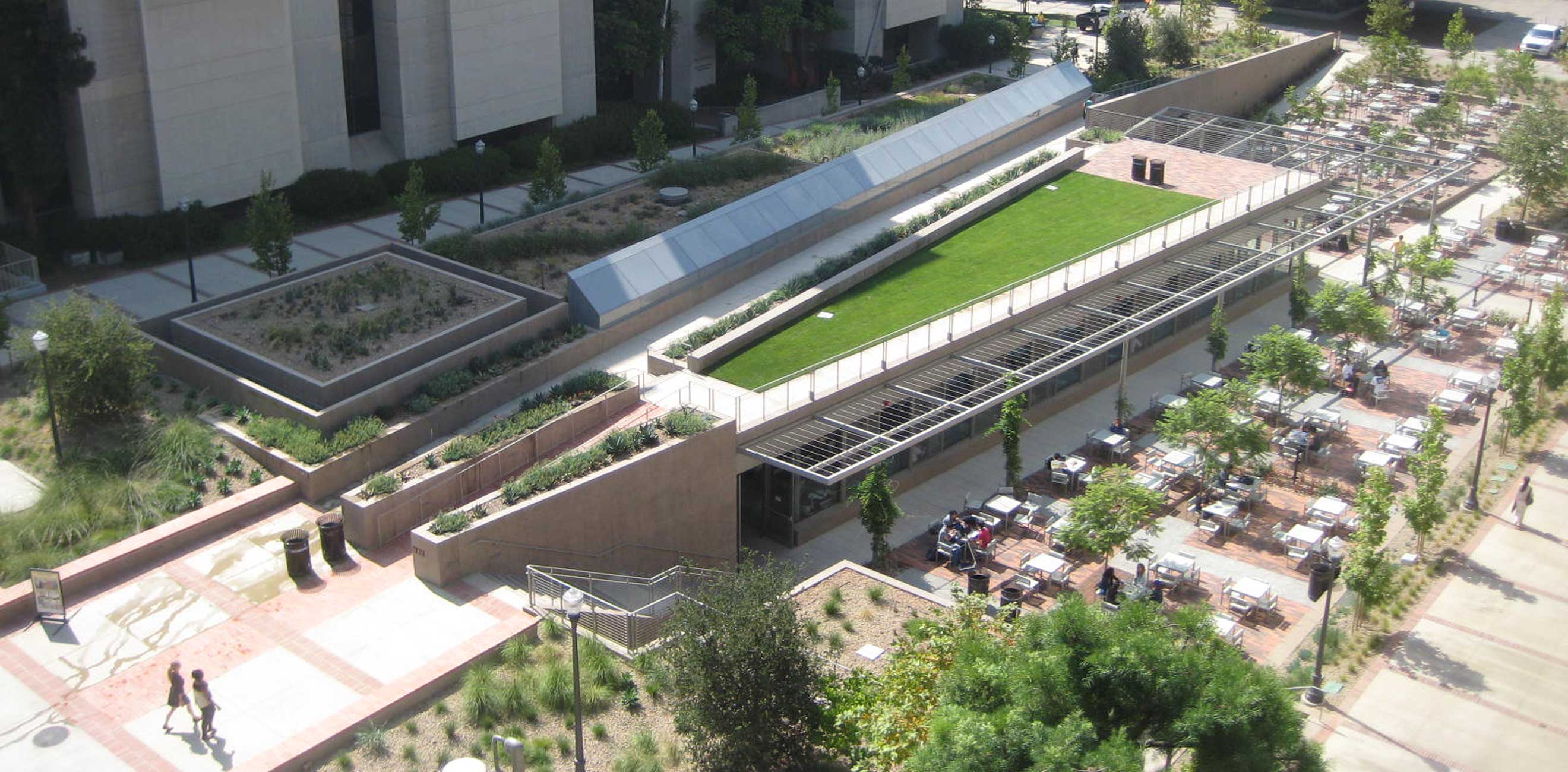
These cultures are very apparent in UCLA’s majors and in the geography of the campus itself. North campus is a representation of the humanities majors and south campus represents STEM majors. As a student walks from one side to the other, even though there is no physical barrier between the two campuses, there is a feeling that the atmosphere has changed (Jung). The buildings change as well where the north campus buildings are considered aesthetically prettier than the southern buildings (“TwoCultures pt3” 1:05). 


(UCLA South)

As an economics major, it felt as if I don’t really belong in the conversation between north and south campus majors being a major that is physically located in the north side, but is categorized as a STEM south campus major. I had already felt these feelings prior to learning these perspectives presented by Snow and Vesna. I believe that universities can play a part in changing its curriculum to create a more interdisciplinary education that can help create the bridge between the two cultures. Rather than be stuck with one mindset, such as having only one major, this is a good reminder to keep in mind the importance of interconnectedness the world requires. This will help with idea creation moving forward to tackle problems together as scientists and nonscientists together. 


Works Cited

Franklin D. Murphy Sculpture Garden. Hammer, hammer.ucla.edu/collections/franklin-d-murphy-sculpture-garden.

Jung, Justin. "A Campus Divided." Prime, Daily Bruin, 2021, prime.dailybruin.com/justinnorth&southcampus/.

Snow, Charles Percy. The Two Cultures and the Scientific Revolution. The Syndics of The Cambridge University Press, 1959.

The Two Cultures: And a second Look. Amazon, www.amazon.com/Two-Cultures-second-Look/dp/B0014PD59S. 

"TwoCultures part1." YouTube, uploaded by UC Online, 30 Mar. 2012, m.youtube.com/watch?v=VNI7dF3DIAM.

"TwoCultures pt3." YouTube, uploaded by UC Online, 2 Apr. 2012, https://m.youtube.com/watch?v=4FOEuxrwxd0.

UCLA South Campus Student Center. landLAB, land-lab.com/project/ucla-south-campus-student-center/.

Vesna, Victoria. "Toward a Third Culture: Being In Between." Leonardo, vol. 34, no. 1, 2001, pp. 121-25.

Desma 9 - Week 3 Robotics + Art

(The Work) I think it is interesting to see how society has responded to the introduction of industrialization and automation over the centu...